
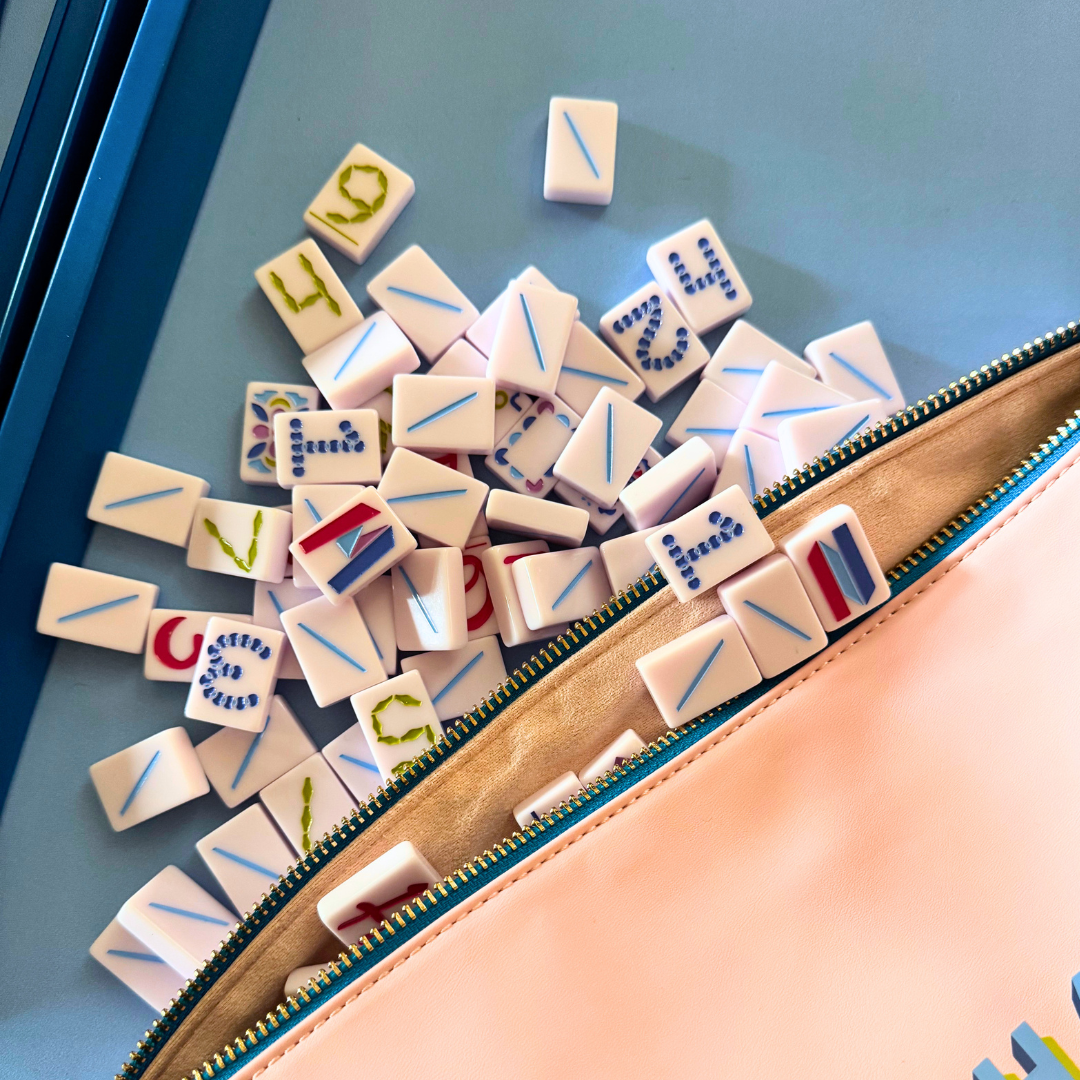
I started noticing it in small ways at first. A friend mentioning she'd joined a mahjong group. Another one asking if I knew how to play. An Instagram post, then another, then suddenly they were everywhere — beautiful tile sets, mahjong nights, women laughing around a table covered in bamboos and dots. At some point it stopped being a coincidence and started feeling like something.
American mahjong has been around in its current form since the 1930s.
It's not new. But right now it's experiencing a revival that feels different from any trend cycle, because the women getting into it aren't playing it ironically or as a retro novelty. They're genuinely hooked.
The table is a technology for connection
There's something the mahjong table does that very few other things in modern life replicate: it puts four women in the same room, facing each other, for two to four hours, with something to focus on together.
That might sound simple. It's actually kind of rare.
Group activities either require too much coordination (book clubs, dinner parties) or don't require enough presence (watching something together). Mahjong hits a specific sweet spot — it's structured enough that you have to pay attention, but social enough that conversation happens naturally. The game creates a container for the kind of friendship that's hard to manufacture in adulthood.
The women I know who play weekly talk about it the same way people used to talk about their Saturday tennis group or their golf foursome. It's not just a game. It's a standing appointment with people they care about.
The aesthetic is genuinely beautiful
This matters more than it might seem. American mahjong has developed a whole visual culture around it — gorgeous tile sets in ombré colorways, elegant racks and cases, the ritual of the setup and the shuffle. The game looks as good as it feels.
That aesthetic dimension means it photographs well, gifts well, and lives naturally in the same mental space as other things women invest in — home, entertaining, the objects that make daily life feel more considered. It's a hobby that has style.
There's a learning curve, and that's part of it
The women who fall hardest for mahjong are often the ones who find games too easy. The hand list, the strategy, the card that changes every year — it gives your brain something real to chew on. You can play casually and enjoy it. You can also get genuinely good at it, and that progression feels satisfying in a way that purely social games don't.
There's also the strategy layer that only reveals itself over time — learning to read the table, anticipating what other players are chasing, knowing when to hold a tile and when to let it go. It rewards attention and pattern recognition. That's a rare combination in a game that's also just deeply fun.
If you're curious about the learning curve, Is American Mahjong Hard to Learn? breaks it down honestly.
It's accessible in a way it hasn't always been
For a long time, learning American mahjong meant knowing someone who already played. The game was taught in person, passed down through communities and social circles, and if you didn't have that access, it was genuinely hard to find your way in.
That's changing. There are more beginner-friendly groups, more resources, and better apps than there used to be. The barrier to entry is lower, which means the community is growing, which means more beginners feel welcome.
The Bird Bam app was built specifically around that access problem — AI coaching, practice modes, and a club finder so you can connect with other players near you, whether you're just starting or you've been playing for years.
The honest reason it's spreading
Word of mouth. The women who discover mahjong tell their friends. Their friends get a tile set and join a group. Those friends tell their friends.
It's not a social media trend in the sense of something that appears and disappears. It's more like a slow burn that's been building for a while and recently reached critical mass in a lot of social circles at once.
If you keep hearing about it and feel the pull to try it — that pull is worth following. Here's where to start.