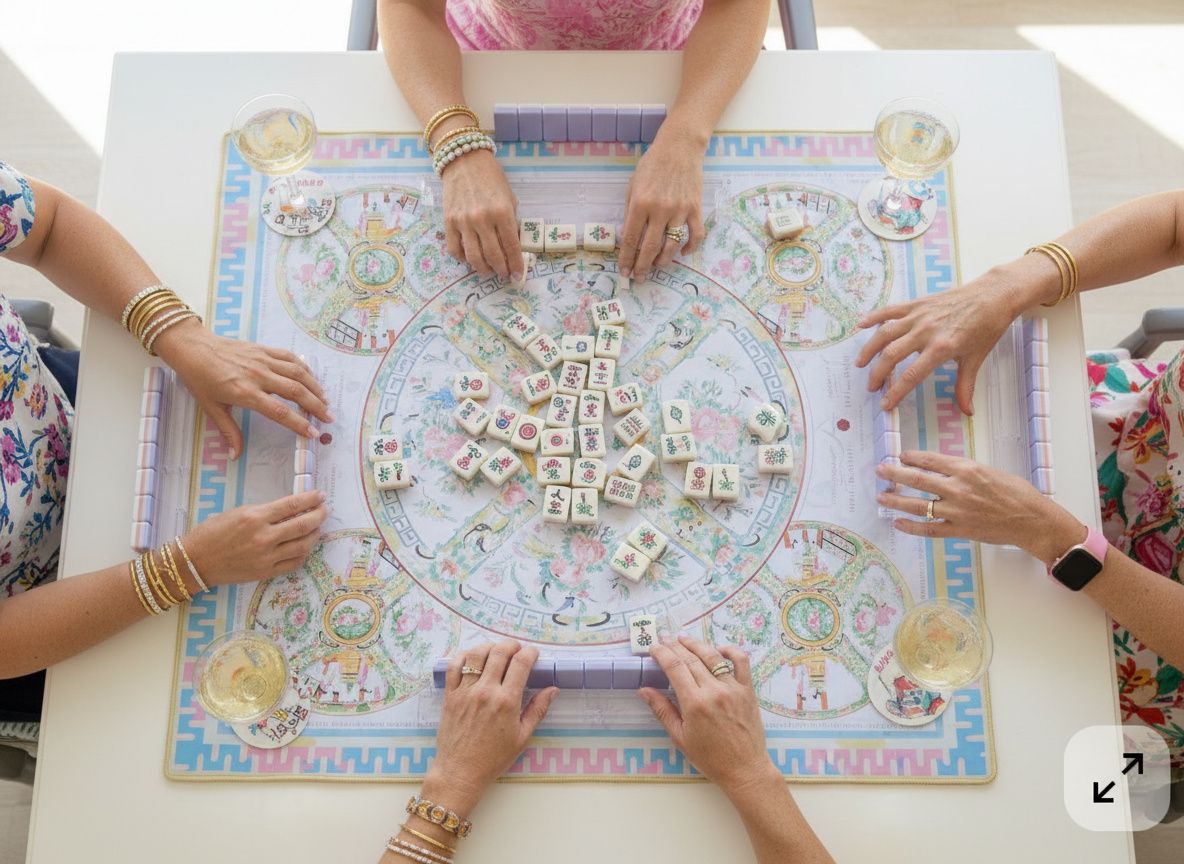
If American mahjong has a heart, it's a single folded card.
The National Mah Jongg League (NMJL) card is the official list of winning hands for American mahjong, and it changes every single year. For new players it can feel overwhelming. For seasoned players, the new card's arrival is one of the most exciting days on the mahjong calendar.
The National Mah Jongg League was founded in 1937 and has published the card for close to 90 years. It's the reason American mahjong has a shared standard at all. Whether you play in Palm Beach, Park City, or Portland, if you're playing NMJL, you're playing from the same list of hands.
The card groups its hands into sections. The 2026 card has nine:
Each line shows the tile pattern, color-coded to show how many suits you'll use, plus the hand's point value. An X means the hand can be exposed (you can claim discards to build it). A C means it must stay concealed until you win.
Keeping it fresh is the point. A new card every year means:
A hand you loved last year might be gone, while a hand you'd never tried becomes your new favorite. That's the magic (and the mild agony).
New cards arrive each spring, and they're ordered directly from the NMJL or through retailers. There's no universal switch-over date. Most tables and leagues simply move to the new card once everyone has one in hand, typically in April. Once your table switches, last year's hands are retired.
Some players also enjoy alternative cards from other publishers, especially in the late-season stretch when the old card feels stale. They can be a fun change of pace, but most American mahjong clubs, lessons, and tournaments play from the NMJL card.
The best way to learn the card isn't to memorize it cold. It's to use it: read racks against it, make discard choices against it, and practice pivoting between sections.
Bird Bam is built around the current NMJL card. Practice with the Daily Rack to build pattern recognition, sharpen your opening decisions with Discard Practice, and work through mid-game decisions in Pivot Practice. Knowing which hands your rack can pivot between, and when to commit, is the skill that separates good players from great ones.