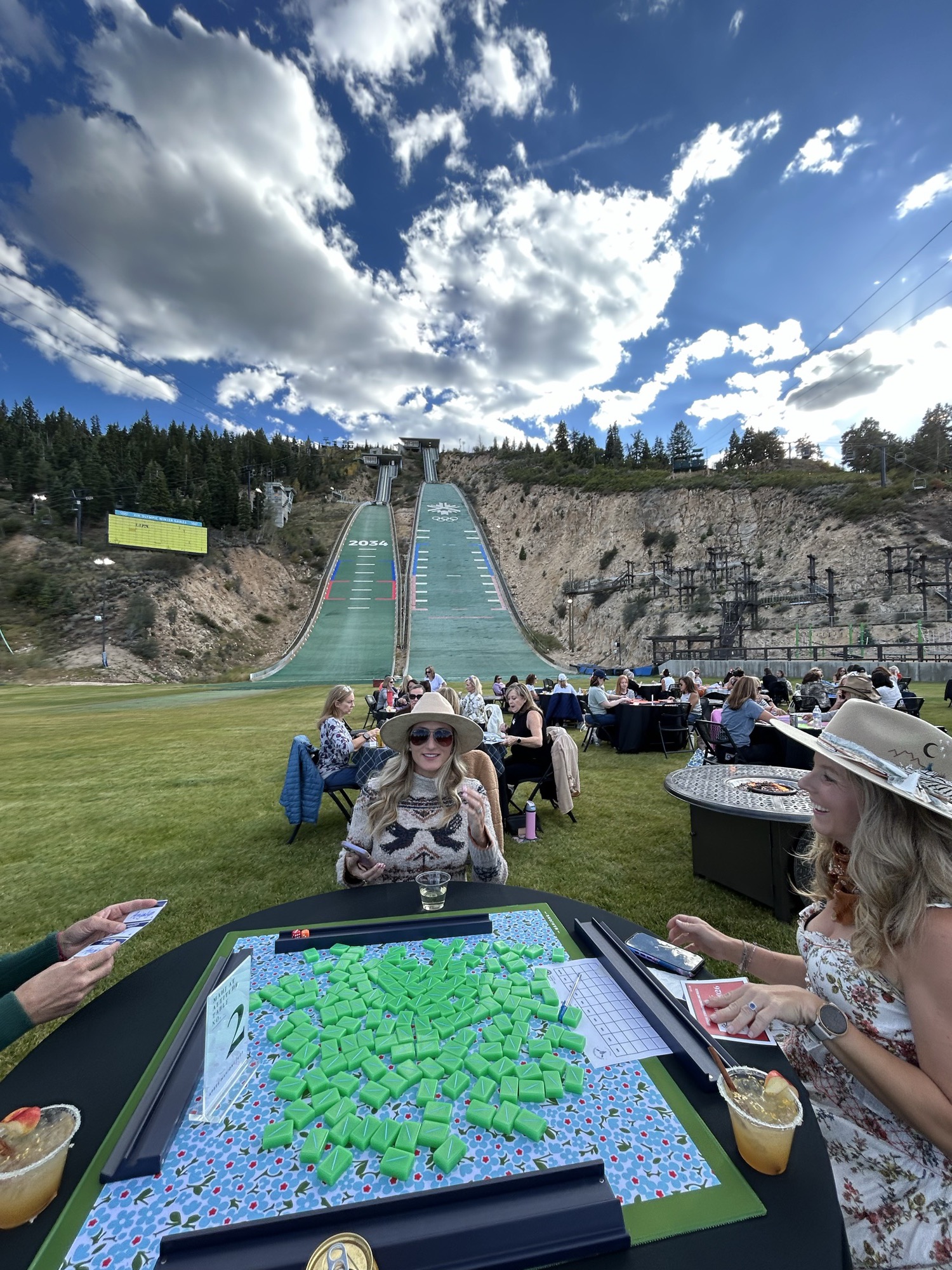
Want to know the biggest pivot I ever made in mahjong? (Pun absolutely intended.) Signing up for a strategy session with my local mahjong club.
Before that, my whole strategy was hoping I'd "see" a pattern in my tiles, then chasing those tiles for the rest of the game. It didn't win me many games, but it won me just enough to keep playing. As they say, you don't know what you don't know.
I took the lesson on a whim. The schedule worked, and I love mahjong, so why not? It completely changed the way I see the game. I walked out a few hours later without mastering anything, but finally knowing what I didn't know.
The biggest breakthrough: the game has stages. I'd always thought of it as two, the Charleston and then everything else. It's really three: the Charleston and early game, the middle game, and the end game. And a move that's smart early, like holding onto a flower and tossing a random tile you don't need, can sink you late in the game.
Throw the tile someone else uses to declare Mah Jongg, and you pay double the hand's value while everyone else pays once. Trust me, that's a painful way to learn this lesson. Understand the stages, practice each one before you sit down at the table, and you won't have to.
The easiest way to know which stage you're in is to look at the wall.
The deal uses up more than a wall's worth of tiles, so the game you actually play happens across the rest:
Once you know which stage you're in, a lot of "what do I do now?" moments answer themselves. Here's what each one looks like at an American mahjong table, and how to practice each in Bird Bam Mahjong.
The beginning runs from the deal through the Charleston and your first few turns, while you're still drawing from the second wall. Your job is to recognize the patterns in your rack and find your direction without locking yourself in.
At the mahjong table, that means three things, and Bird Bam Mahjong has a game for each:
Want to go deeper first? Read The First Discard: Why It's the Most Important Decision You'll Make All Game and Why Would Anyone Do a Blind Pass?.
You've reached the middle game somewhere in the second wall. Exposures are starting to show up on other racks, so you're watching for jokers you can swap out of them, and tracking the tiles you need in the discards and the wall. Your rack has a clearer shape, and it's time to pick one hand and build toward it.
This is also when calling and exposing tiles becomes a real decision. A good rule of thumb is to have at least seven tiles toward Mah Jongg before you call a discard. Call too early, and you've told the table what you're building.
Pro tip: the joker swap. Holding two of a tile you think another player needs? Discard one, and wait. If they call it and expose a pung or kong with a joker in it, use your second copy on your next turn to swap out their joker. It won't always land, but when it does, you've traded one tile for the most flexible tile in the game.
The middle is also when your plan gets knocked off course, and it's the right time to pivot if you need to. Signs it may be time:
Switching well comes down to recognizing patterns: which other hands on the card can use the tiles you're already holding.
The middle-game question to ask yourself: "Is this hand still getting closer?" If the answer has been no for a while, it's time to look at where your tiles could go instead.
Practice the middle in Bird Bam Mahjong:
Torn between two hands right now? Why You Keep Discarding the Wrong Tile has a whole section on when to switch hands mid-game.
By the third and fourth walls, the game shifts. Someone is likely one tile away, and every tile you throw could be the one they're waiting for. Mahjong columnist Tom Sloper has a good test for knowing you've arrived: you're in the end game "when you are worrying more about discards than draws".
Why it matters: remember that double payout. Every tile you throw this late could hand someone Mah Jongg, and leave you with the biggest bill at the table.
Push to the wall. If you can't make your hand, your next-best outcome is that nobody does. Playing safe until the wall runs out and the game ends with no winner is a real strategy.
What defensible discards look like at an American table:
Defense isn't giving up. It's still playing, just for a different goal.
Get help with the end game in Bird Bam Mahjong:
Save this one for your next game night. And tell us: which stage is hardest for you, the beginning, the middle, or the end? Share it with us on Instagram at @cheersbirdbam.
Practice every stage of the game. Bird Bam Mahjong is your practice table for American mahjong: Daily Rack, Charleston Practice, Discard Practice and Pivot Practice, plus Bammie, your coach, to walk you through the why. We're launching soon on iPhone. Join the founding members to be first at the table.